Executive Briefing
The Human Reliability Leader
No Surprises in High-Hazard Operations
How leaders convert field intelligence into disciplined action before weak signals become operational surprises.
High-hazard operations rarely fail without warning.
Before the incident, there is often a weak signal. Before the shutdown, there is often a recurring defect. Before the major surprise, someone usually knows enough to be uneasy.
The challenge is not only technical. It is whether operational truth travels early enough to matter—and whether leaders convert that truth into owned, prioritized, and verified action.
The Human Reliability Leader introduces a practical model for closing the gap between formal systems and lived operating reality, so leaders can reduce avoidable surprises in complex, high-risk operations.
What the briefing helps leaders do
Close the gap between formal systems and lived operating reality.
Convert weak signals into owned, prioritized, and verified actions.
Build the trust, discipline, and ownership required for safer, more reliable performance.
Three models from the briefing
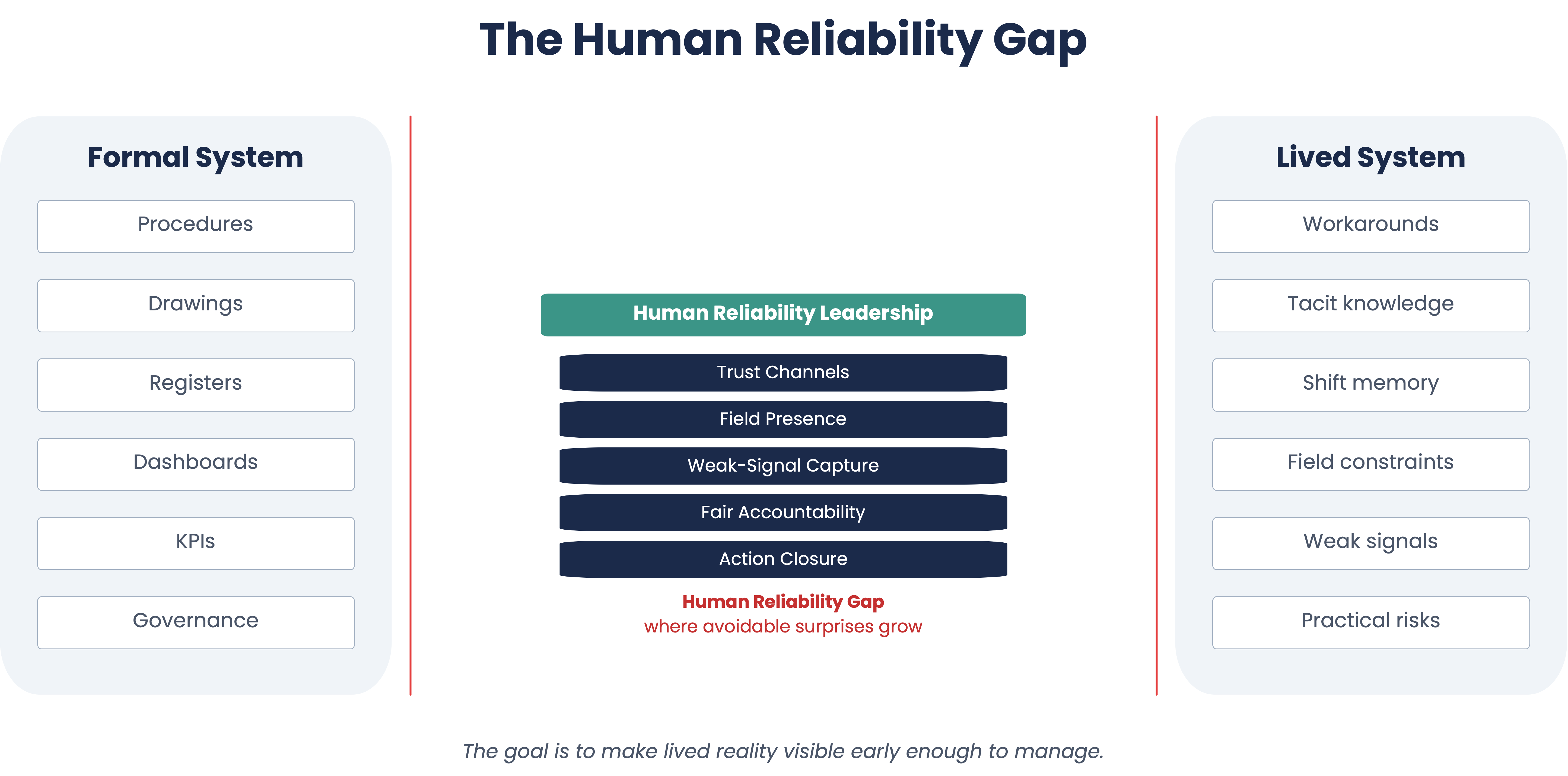
The Human Reliability Gap
Where formal systems and lived operating reality drift apart—and avoidable surprises grow.
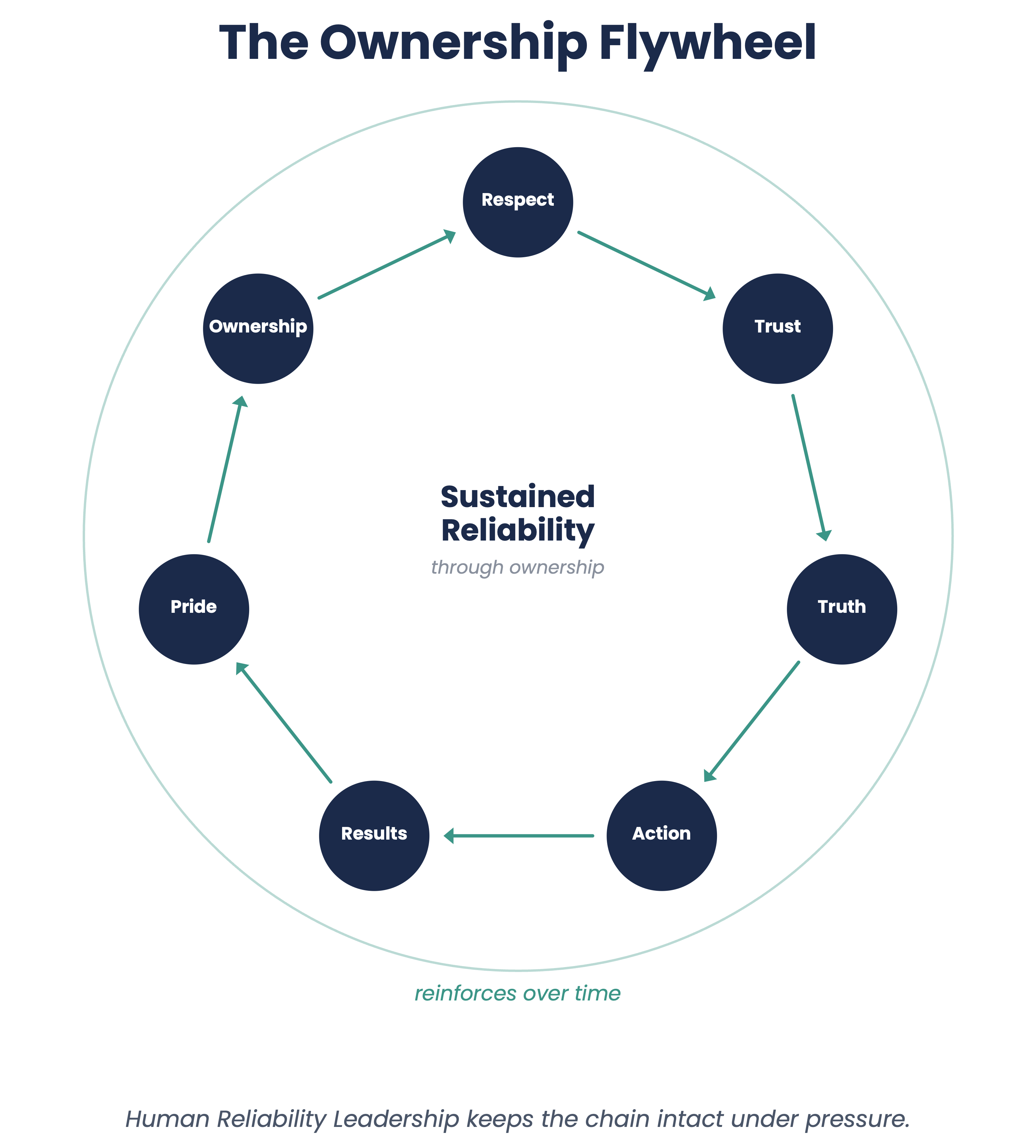
The Ownership Flywheel
How respect, trust, truth, action, results, pride, and ownership reinforce sustained reliability.
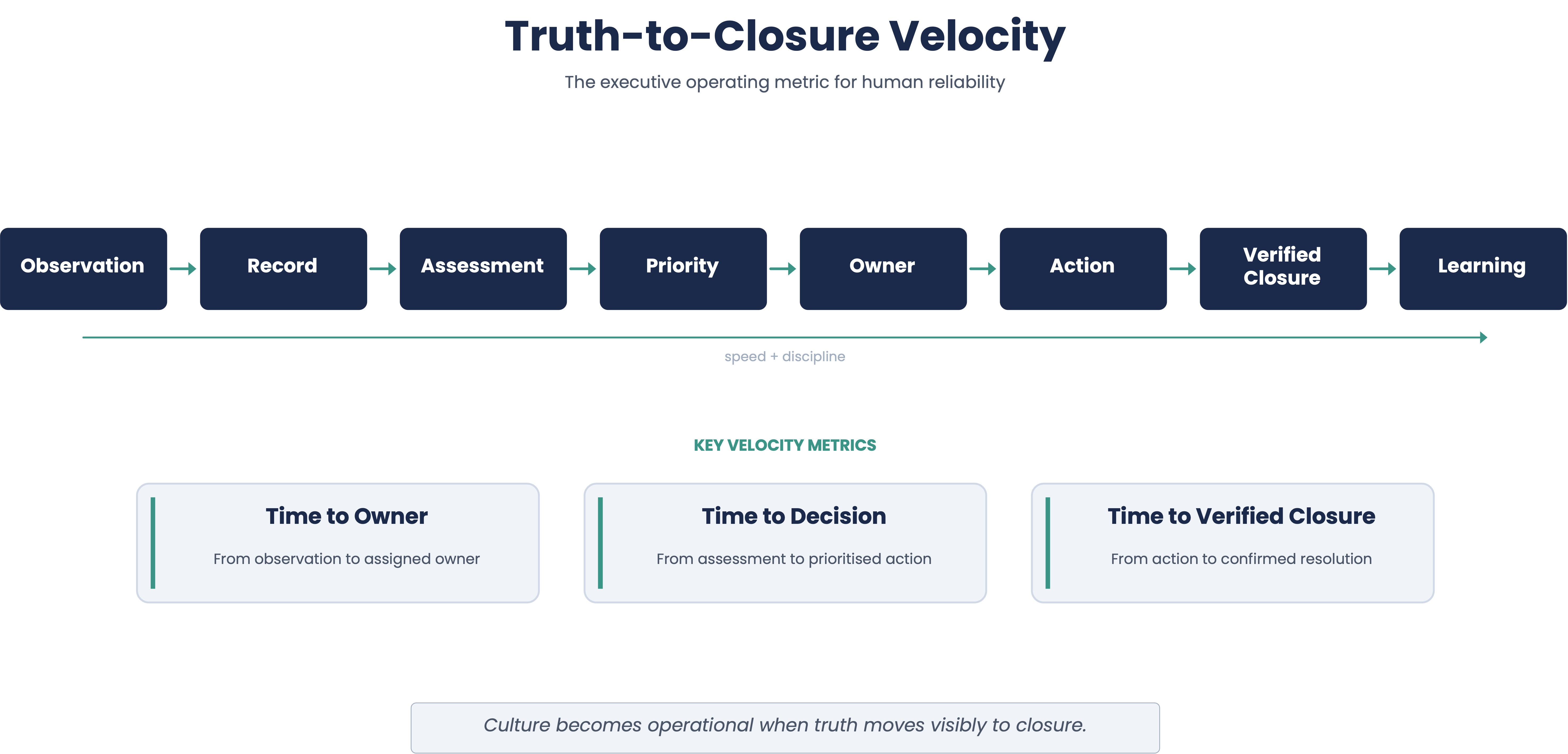
Truth-to-Closure Velocity
A practical operating metric for how quickly weak signals move from observation to verified closure.
Who this is for
This briefing is written for leaders responsible for brownfield recovery, restart readiness, reliability improvement, asset integrity, maintenance, turnaround performance, and operational excellence in high-hazard, asset-intensive environments.
It is especially relevant where weak signals, deferred work, normalized workarounds, and unclear ownership can become costly operational surprises.
Human Reliability Review
A focused 2–4 week owner-side diagnostic for high-hazard, asset-intensive operations where leaders want to reduce avoidable surprises by improving weak-signal flow, field intelligence conversion, action closure, and ownership.
Typical outputs
- Human Reliability Gap Map
- Weak-Signal Flow Review
- Truth-to-Closure Assessment
- Leadership Trap Review
- Reliability Integration Check
- 90-Day Improvement Roadmap
“The future of reliability will not belong to the organization with the most dashboards. It will belong to the organization where truth travels fastest, actions close visibly, and people care enough to own the outcome.”